
How Team Sports Teach Emotional Regulation
The Emotional Gym: Why Every Game Builds More Than Physical Strength
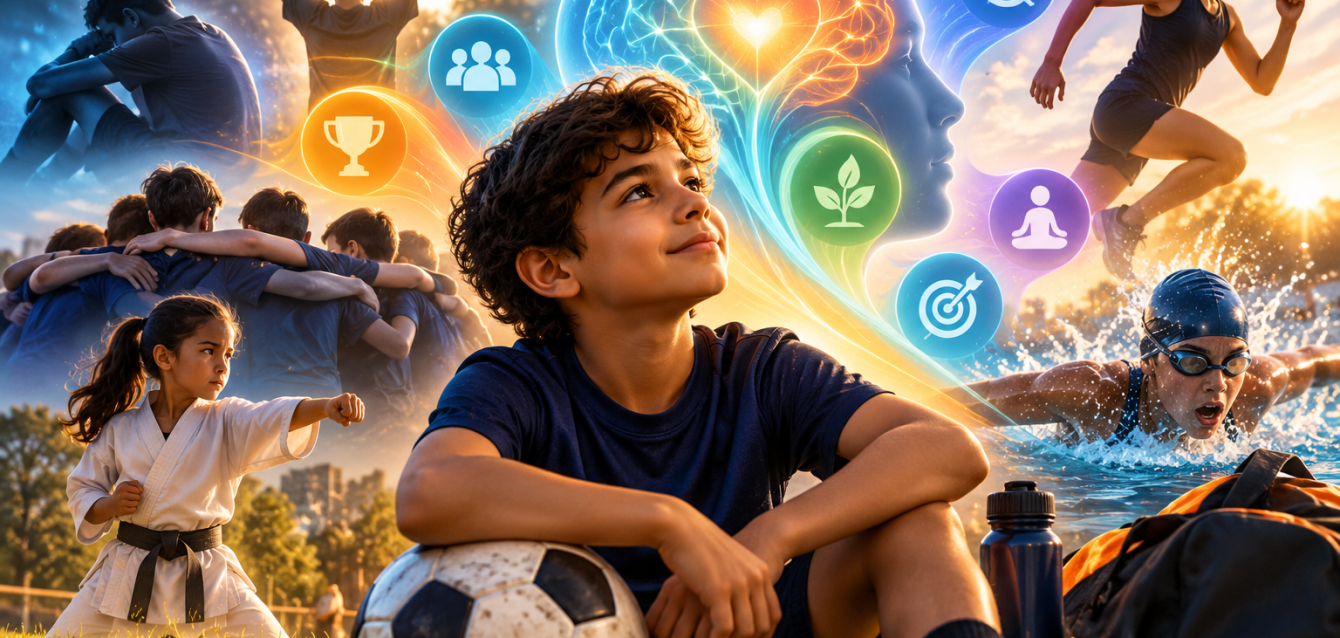
Have you ever noticed how a football match can bring out excitement, frustration, confidence, disappointment, teamwork, and resilience-all within a single hour?
Whether it’s scoring a winning goal, missing an important shot, helping a teammate, or learning from defeat, team sports and emotional regulation go hand in hand.
At AMPLE Therapy, we believe that every sporting activity is more than exercise. Every training session becomes an opportunity to strengthen emotional wellbeing, develop confidence, and learn valuable life skills that last far beyond the final whistle.
Sport doesn’t simply build stronger muscles.
It builds stronger minds.
It builds stronger relationships.
Most importantly, it builds stronger emotional resilience.
🧠 What Is Emotional Regulation?
Emotional regulation is the ability to recognise, understand, and manage emotions in healthy and constructive ways.
It doesn’t mean avoiding emotions.
It means learning how to respond to them.
Children and adults who develop emotional regulation gradually learn to:
😊 Celebrate success without becoming overconfident.
😔 Accept disappointment without giving up.
😤 Manage frustration calmly.
🤝 Communicate respectfully with others.
💙 Show empathy and kindness.
🌱 Keep trying even after setbacks.
These are essential life skills that support learning, relationships, careers, and mental wellbeing.
⚽ Team Sports and Emotional Regulation: The Emotional Gym
We often think of sport as training the body.
At AMPLE Therapy, we like to think of it as The Emotional Gym.
Just as lifting weights strengthens muscles, every sporting experience strengthens emotional skills.
Each game becomes a workout for the mind.
Every challenge develops emotional fitness.
Here are just a few examples:
🏆 Winning develops humility and gratitude.
💔 Losing develops resilience.
😤 Making mistakes develops emotional control.
👏 Supporting teammates develops empathy.
🎯 Following instructions develops self-discipline.
🤝 Working together develops communication.
⏳ Waiting your turn develops patience.
💪 Facing stronger opponents develops courage.
🌟 Trying again after failure develops perseverance.
Every session becomes another opportunity to grow—not only as an athlete, but as a person.
🤝 How Team Sports Develop Social and Emotional Skills
One of the greatest strengths of team sports is the opportunity to learn alongside others.
Children naturally begin to understand:
💬 Clear communication.
❤️ Respect for teammates and coaches.
🤝 Cooperation and trust.
🌟 Leadership.
😊 Encouraging others.
🎯 Shared responsibility.
These experiences help children understand that success isn’t always about individual achievement.
Sometimes the greatest victory is helping someone else succeed.
🥋 Individual Sports Teach a Different Kind of Strength
While team sports teach collaboration, individual sports offer equally valuable emotional lessons.
Activities such as:
🥋 Martial Arts
🏊 Swimming
🏃 Athletics
🤸 Gymnastics
🎾 Tennis
encourage children and adults to compete against themselves rather than others.
Individual sports develop:
🎯 Self-discipline.
🧘 Emotional control.
💪 Confidence.
🌱 Personal responsibility.
🏅 Goal setting.
Rather than comparing themselves with others, participants learn to focus on continuous improvement.
🧠 The Brain Benefits of Sport
Physical activity doesn’t only strengthen muscles.
It also supports healthy brain development.
Research suggests that regular physical activity may help improve:
🧠 Executive functioning.
🎯 Attention and concentration.
💭 Memory.
⚖️ Decision making.
😊 Emotional regulation.
💙 Overall mental wellbeing.
During sport, the brain constantly processes information, solves problems, and adapts to changing situations.
This combination of movement and thinking creates rich opportunities for learning.
❤️ Sport Helps Children Understand Big Emotions
Every child experiences big emotions.
Excitement.
Anger.
Fear.
Disappointment.
Pride.
Sport provides a safe environment where these emotions naturally occur.
Instead of avoiding them, children learn to:
Take deep breaths.
Listen to feedback.
Stay calm under pressure.
Recover after mistakes.
Celebrate others.
Manage competition respectfully.
These emotional lessons often transfer into everyday life at home, school, and within friendships.
🌱 Emotional Regulation Beyond the Playing Field
The emotional skills learned through sport don’t stay on the football pitch or inside the martial arts dojo.
Children who develop emotional regulation through physical activity often become better equipped to:
📚 Manage classroom challenges.
🏡 Resolve disagreements at home.
👫 Build stronger friendships.
🎓 Cope with exams and academic pressure.
💼 Handle future workplace situations.
Sport quietly prepares people for many of life’s everyday challenges.
🌈 The AMPLE Therapy Approach
At AMPLE Therapy, movement is never just movement.
Every activity is designed to support holistic development across our five therapeutic pillars.
🎨 Artistic Therapy encourages creativity and self-expression.
🧠 Mental Therapy develops emotional awareness, resilience, and confidence.
💪 Physical Therapy uses movement to strengthen coordination, emotional regulation, and wellbeing.
🌱 Life Therapy supports communication, independence, and social development.
📚 Educational Therapy builds executive functioning, learning strategies, and reflective thinking.
Whether someone joins us for martial arts, movement sessions, or therapeutic physical activities, every experience is designed to help individuals become stronger both physically and emotionally.
❓ Frequently Asked Questions
Can team sports improve emotional regulation?
Yes. Team sports regularly expose children and adults to situations that require patience, resilience, communication, and emotional control, helping these skills develop naturally over time.
Are individual sports good for emotional development?
Absolutely. Individual sports help develop confidence, self-discipline, emotional resilience, and goal-setting by encouraging personal growth and self-reflection.
Can sport improve children’s mental wellbeing?
Research suggests that regular physical activity can support emotional wellbeing, confidence, social connection, and overall mental health when enjoyed in a positive and supportive environment.
How does AMPLE Therapy use sport in therapy?
At AMPLE Therapy, physical activities are carefully adapted to each individual’s goals and abilities, helping build emotional regulation, confidence, communication, and lifelong wellbeing through movement.
🌟 Every Match Shapes Character
The scoreboard tells only part of the story.
Behind every goal scored…
Every race completed…
Every martial arts grading…
Every difficult training session…
A far greater transformation is taking place.
Confidence is growing.
Resilience is strengthening.
Empathy is developing.
Emotional regulation is improving.
Character is being built.
At AMPLE Therapy, we believe that every sporting experience becomes another opportunity to develop the emotional skills needed for life.
Because the greatest victory isn’t always winning the game.
Sometimes…
It’s becoming the person the journey helps you become.
💙 Ready to Begin the Journey?
Whether you’re looking to help your child build confidence, develop emotional regulation, improve social skills, or simply enjoy movement in a supportive environment, AMPLE Therapy is here to help.
Our personalised programmes combine physical activity with emotional development to help children and adults thrive—on and off the playing field.
✨ Book your free introductory consultation today and discover how movement can become one of life’s greatest teachers.