
Art Therapy for Stroke Recovery
Rebuilding Confidence Through Creativity
A stroke can change life in an instant.
Simple everyday activities such as holding a cup, writing a note, speaking to loved ones, or even expressing emotions may suddenly become difficult. Recovery is often a long journey that requires patience, support, and determination.
While physiotherapy and medical rehabilitation play a vital role in rebuilding physical abilities, emotional recovery is equally important. Many stroke survivors experience frustration, anxiety, low confidence, and even a loss of identity as they adapt to life after a stroke.
At AMPLE Therapy, we believe healing involves the whole person, not just the physical body. Art therapy offers a creative, meaningful, and therapeutic way to support recovery by encouraging expression, rebuilding confidence, and helping people reconnect with themselves.
🧠 Understanding Stroke Recovery
A stroke occurs when the blood supply to part of the brain is interrupted, causing brain cells to become damaged. Depending on the area affected, a stroke may influence movement, speech, memory, emotions, vision, balance, or cognitive function.
Every stroke survivor’s journey is unique.
Some people recover quickly, while others require ongoing rehabilitation over many months or years. Recovery is rarely just physical. Many individuals also experience emotional challenges that can sometimes be harder to see than physical symptoms.
These may include:
❤️ Anxiety
💭 Depression
😔 Loss of confidence
🧩 Difficulty concentrating
💬 Problems communicating
🤝 Social isolation
Recognising these emotional challenges is an important part of the rehabilitation process.
🎨 What Is Art Therapy?
Art therapy is a therapeutic approach that uses creative activities to support emotional wellbeing, communication, cognitive rehabilitation, and personal growth.
Contrary to what many people believe, art therapy is not about creating perfect artwork.
There is no right or wrong way to paint.
No artistic experience is required.
Instead, creativity becomes another language. Colours, shapes, textures, and brushstrokes provide opportunities for individuals to communicate thoughts and emotions that may be difficult to express with words.
Whether someone enjoys painting, drawing, collage, sculpture, or mixed media, every creative activity can become part of a meaningful recovery journey.
🌈 How Art Therapy Can Support Stroke Recovery
Art therapy complements traditional rehabilitation by engaging both the mind and body in creative ways.
Some potential benefits include:
🖌️ Improving Fine Motor Skills
Holding a paintbrush, mixing colours, cutting paper, or shaping clay encourages gentle hand and finger movements. These activities may help improve coordination, dexterity, and control while making rehabilitation enjoyable rather than repetitive.
🧠 Encouraging Neuroplasticity
One remarkable feature of the human brain is its ability to adapt.
This process, known as neuroplasticity, allows healthy parts of the brain to develop new connections after injury. Creative activities stimulate multiple areas of the brain simultaneously, encouraging movement, planning, memory, attention, and imagination to work together.
While art therapy does not replace medical treatment, it can become a valuable part of a wider rehabilitation programme.
❤️ Supporting Emotional Healing
Many stroke survivors struggle with emotions that are difficult to describe.
Art offers a safe and non-verbal way to explore these feelings.
A painting may express hope.
A colour may represent calm.
A simple sketch may communicate emotions that words cannot.
Creative expression allows people to process experiences at their own pace without pressure.
🌟 Rebuilding Confidence
Recovery is often measured in small victories.
Finishing a painting.
Holding a brush independently.
Choosing colours.
Trying something new.
These moments may appear small to others, but for a stroke survivor they can represent enormous personal achievements that gradually rebuild confidence and independence.
💬 Supporting Communication
Some strokes affect speech and language.
Creative activities provide another method of communication when speaking feels challenging.
Art allows individuals to tell stories, share emotions, and express themselves in meaningful ways while speech continues to develop alongside other therapies.
🌿 Reducing Stress and Anxiety
Creating art naturally encourages people to slow down.
Focusing on colours, textures, and gentle movements promotes relaxation and mindfulness. Many people describe feeling calmer after creative sessions, making art therapy a positive way to reduce emotional stress during recovery.
🖼️ What Happens During an Art Therapy Session?
Every session at AMPLE Therapy is tailored to the individual.
There is no expectation to produce a masterpiece.
Instead, sessions focus on comfort, confidence, and personal expression.
Activities may include:
🎨 Watercolour painting
🖍️ Drawing and colouring
✂️ Creative collage
🪵 Working with natural materials
🌸 Texture exploration
🖌️ Guided artistic activities
Our therapists provide gentle encouragement while adapting activities to suit each person’s physical abilities, emotional needs, and rehabilitation goals.
Every achievement, no matter how small, is celebrated.
🌟 Why Families Choose AMPLE Therapy
At AMPLE Therapy, creativity is only one part of the journey.
Our approach combines our five therapeutic pillars:
🎨 Artistic Therapy to encourage creative expression.
🧠 Mental Therapy to build resilience and emotional wellbeing.
💪 Physical Therapy to support movement, coordination, and confidence.
🌱 Life Therapy to promote independence and personal growth.
📚 Educational Therapy to strengthen learning and cognitive development where appropriate.
This holistic approach allows every therapy programme to be personalised around the individual rather than focusing on a single condition.
We believe recovery should nurture confidence, independence, relationships, and quality of life.
❓ Frequently Asked Questions
Can stroke survivors benefit from art therapy?
Yes. Art therapy can provide emotional support while encouraging creativity, confidence, and gentle physical activity as part of a wider rehabilitation programme.
Do I need artistic experience?
Not at all.
Art therapy focuses on expression rather than artistic ability. Everyone can participate regardless of experience.
Is art therapy suitable alongside physiotherapy?
Yes. Many people choose art therapy as a complementary approach alongside physiotherapy, occupational therapy, speech and language therapy, and other rehabilitation services.
Can older adults take part?
Absolutely. Sessions are adapted to each individual’s abilities and can be enjoyed by adults of all ages.
💙 Begin Your Creative Recovery Journey
Recovery after a stroke is about far more than regaining movement.
It is about rebuilding confidence.
Rediscovering purpose.
Finding joy again.
Sometimes, the first step isn’t learning to walk a little further.
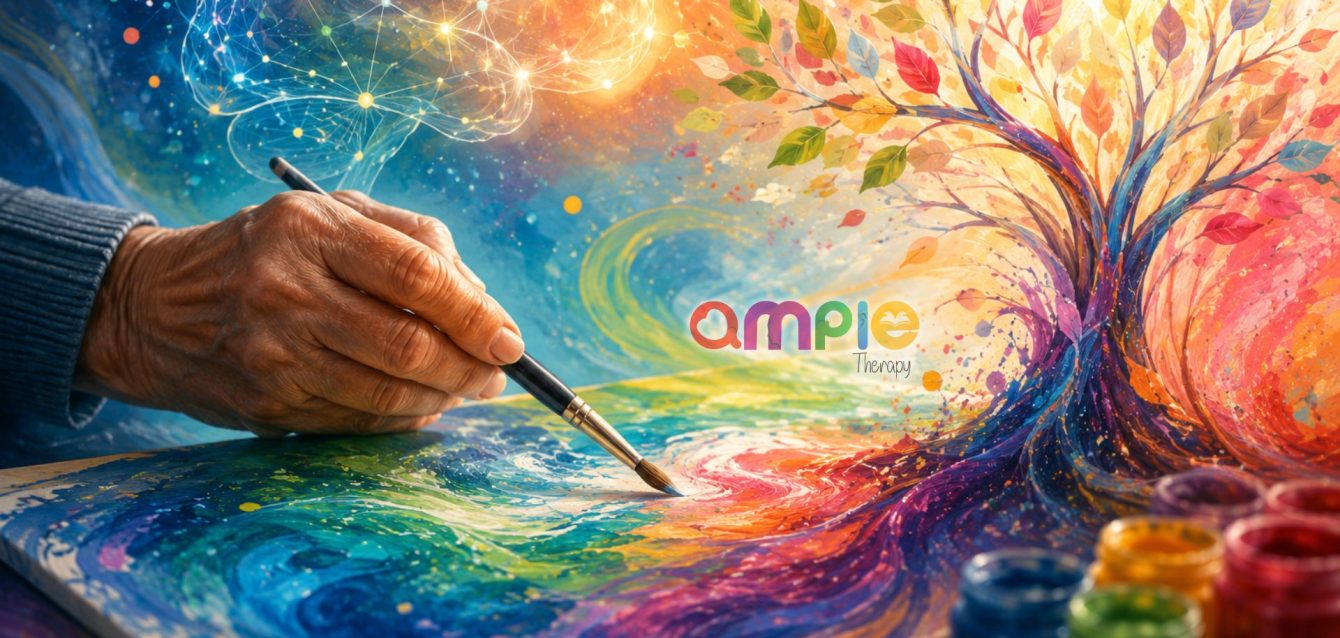
Sometimes, it’s picking up a paintbrush.
At AMPLE Therapy, we provide a welcoming and supportive environment where creativity becomes part of healing. Whether you’re recovering from a recent stroke or continuing your rehabilitation journey, we’re here to help you move forward with confidence.
✨ Book your free introductory consultation today and discover how art therapy can become a meaningful part of your recovery.
👉 https://ampletherapy.org.uk/appointments/